Whale Watching in the Algarve: Species and Tours
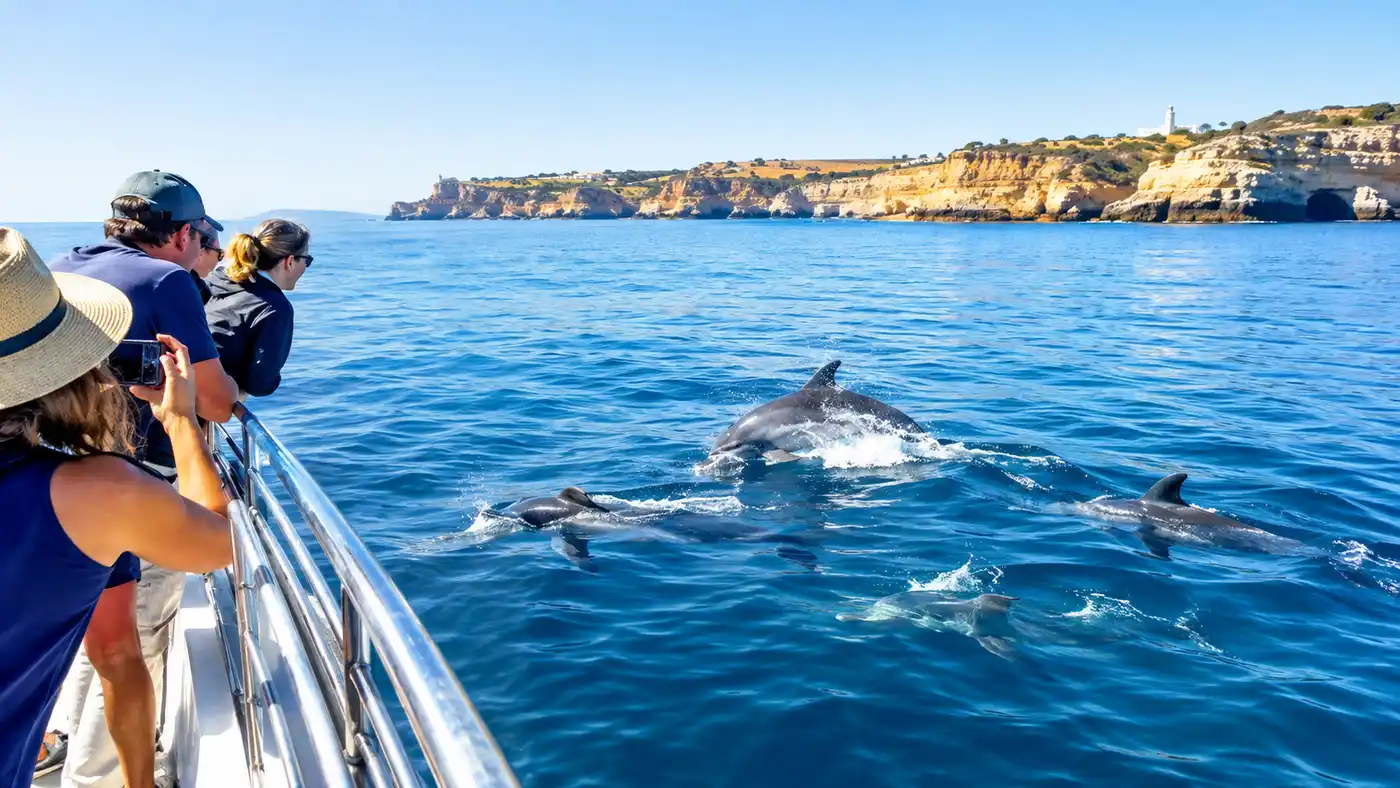
Most visitors head down to southern Portugal thinking exclusively of grilled sardines, golden sea caves, and lazy afternoons on crowded beaches. I used to think the exact same way until a marine biologist dragged me out seven miles south of Cape St. Vincent into open Atlantic water. When a sixty-foot fin whale surfaces next to a small boat, the sound of its blowhole expelling air hits your chest like a bass speaker at a live concert. Booking a dedicated trip for whale watching algarve skippers run is rarely the first thing tourists think of doing, mostly because coastal dolphin tours get all the advertising space.
The southwest corner of the Iberian Peninsula sits right next to a massive underwater highway. Cetaceans migrate between the cold, nutrient-rich waters of northern Europe and the warm feeding regions of the Mediterranean and West Africa. If you pick the right harbor, book during the right migration window, and keep your expectations realistic, whale watching portugal offers can rival some of the better-known spots in the Atlantic.
Book your dolphin watching algarve experience:
Species Spotted During Whale Watching Algarve Tours
Fin whales show up more often than any other baleen whale here. They are the second-largest animals to ever live on Earth. Seeing a fin whale roll its long, slate-grey back through a heavy ocean swell makes you realize how tiny your tour boat actually is. They are fast swimmers. One minute you see a five-meter plume of misty vapor hanging over the horizon, and thirty seconds later the animal resurfaces four hundred meters away. You do not chase a fin whale. You shut off the motor, wait quietly, and hope it decides to cross your drift line.
Minke whales appear frequently as well. They are much smaller, usually measuring between seven and nine meters, but they make up for their modest size with sheer curiosity. I have had minkes circle an idling boat for twenty minutes, rolling on their sides to inspect the passengers above. Their white flipper bands glow bright turquoise under the clear Atlantic water just before they break the surface.
Then you have the orcas. Biologists classify them as oceanic dolphins, but nearly everyone on board considers them killer whales. A distinct subpopulation of Iberian orcas follows bluefin tuna runs up through the Strait of Gibraltar toward the Bay of Biscay. Between July and October, these family pods often pass close to Sagres and Lagos. Watching them hunt together or surf the wake of a research vessel is heart-stopping. Humpback whales also make cameo appearances in late spring, usually mothers traveling slowly with newborn calves hugging the continental shelf.
Sei whales, sperm whales, and even blue whales pass by the southern coast, but they generally stick to the bathymetric abyssal plains twelve to twenty miles out. Commercial day-trips rarely travel out that far because fuel costs spike and the open ocean gets dangerously rough for casual tourists. Still, the edge of the shelf provides more than enough action to keep a morning trip interesting.
The Best Departure Ports for Portugal Whale Watching in the Algarve
Sagres is ground zero for deep-water marine life. The continental shelf drops off much closer to land here than it does anywhere else along the south coast. Leaving Baleeira harbor puts you over productive feeding depths within twenty minutes of clearing the breakwater. When deciding between various dolphin watching trips out of Sagres and trips leaving from the central coast, Sagres wins for pelagic diversity every time. The wind is the main drawback. The western cape takes the full brunt of Atlantic gales, which means cancellations happen regularly.
Lagos is the most balanced alternative. You get access to reliable operators without having to stay in windy, isolated Sagres. Boats leaving the Lagos marina take about forty minutes to reach deeper water offshore. Skippers talk to each other across open VHF radio channels. If a fishing vessel or another tour spot a whale blow five miles out, the word spreads fast, and the fast boats converge on the area at twenty-five knots.
Portimão and Albufeira offer plenty of boat trips, but their location works against serious whale seekers. The ocean floor slopes gently away from shore along the central Algarve, meaning boats have to burn substantial time and fuel just to reach the depths where large whales prefer to feed. Albufeira tends to run larger, slower catamarans built for sipping sangria and looking at cliffs. If you book an Albufeira boat hoping for a fin whale, you will likely spend your morning looking at bottlenose dolphins near the shoreline instead. Not a bad morning, but not whale watching.
| Departure Port | Boat Type Used | Transit Time to Deep Water | Typical Cost | Best Suited For |
|---|---|---|---|---|
| Sagres (Baleeira) | Rigid Inflatable Boat (RIB) | 15 to 25 minutes | €45 - €60 | Serious wildlife watchers |
| Lagos Marina | RIB or Small Catamaran | 35 to 50 minutes | €40 - €55 | Balance of sightings and comfort |
| Portimão | Large RIB or Cruiser | 45 to 60 minutes | €38 - €50 | Families staying central |
| Albufeira | Catamaran / Passenger Boat | 60+ minutes | €35 - €48 | General coastal cruises |
Note: Sagres boat tours launch from Porto da Baleeira on the eastern flank of the headland. While the harbor itself sits in calm water, conditions change violently the moment the skipper clears the point into open ocean.
Timing Your Whale Watching Algarve Excursion
Migrating whales do not keep a rigid calendar, but historical sightings follow clear patterns. Spring brings the northbound migration from late March through May. The sea comes alive with plankton blooms, attracting hungry baleen whales heading toward Iceland and Norway. Spring weather can be temperamental, though. Low-pressure systems generate three-meter waves that can keep boats tied to the dock for four straight days.
Autumn brings the return journey. September and October are easily my favorite months to get out on the water. The Atlantic has warmed up after months of summer sun, the brutal afternoon winds begin to ease, and the southbound animals move through. Knowing the best months for spotting marine mammals helps prevent booking a trip during mid-summer dead zones when water temperatures rise and big whales stay far out in deeper, colder currents.
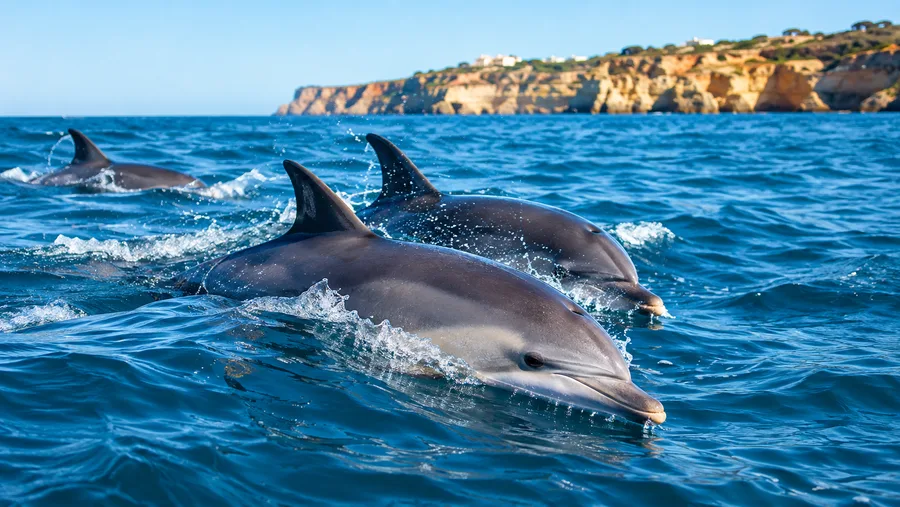
Mid-summer is dominated by local dolphins and passing orca pods hunting tuna. July and August bring blazing sunshine, flat water, and packed tourist docks, but fin whale sightings drop off sharply. If you find yourself searching online for whale watching near me during an August beach holiday in Portugal, adjust your expectations toward common dolphins, striped dolphins, and the occasional minke whale.
Daily timing is just as critical as the month you choose. The sea is usually flattest at eight in the morning before local land heating generates the *Nortada*, the prevailing north-northwest breeze. When that wind kicks up around one in the afternoon, it creates short, choppy whitecaps that make spotting a whale spout nearly impossible.
- Morning departures: Book the earliest boat available, usually between 08:30 and 09:30, for smooth sea conditions.
- Swell height under 1.5 meters: Check nautical forecasts like Windfinder; heavy groundswell makes spotting surface animals difficult and triggers seasickness.
- Wind speeds under 12 knots: Once whitecaps appear, a whale blow blends into the sea foam within a second.
Book your dolphin watching algarve experience:
What Actually Happens on a Tour
Most dedicated wildlife companies operate rigid inflatable boats (RIBs) carrying twelve to eighteen people. You sit straddling a padded jockey seat, holding onto a cold stainless steel bar in front of you. It feels somewhat like riding a dirt bike over water. When the boat gets clear of the harbor speed limits, the twin 250-horsepower outboards open up, and the boat skips across the water at high speed. It is noisy, windy, and wet.
The crew usually includes a certified marine biologist. They do not just stare randomly into the ocean. They look for feeding indicators. Diving northern gannets hitting the water like white missiles tell the skipper there is baitfish below. An oily sheen on the ocean surface accompanied by a fishy smell often means cetaceans are feeding beneath you. Gulls wheeling frantically over a single patch of sea usually points to an active food boil.
Pro tip: Take a proven seasickness tablet exactly 60 minutes before leaving the dock, even if you think you have an iron stomach. Sitting dead in the water on an eight-meter boat while waiting for a whale to resurface makes almost everyone green eventually.
Portuguese law strictly regulates marine tourism to protect the animals. Skippers must not approach closer than 100 meters directly behind or in front of a whale. They cannot circle a group or cut through a pod. Good skippers travel parallel to the animal at idle speed, matching its pace until the whale either dives deep or turns away. Sometimes a curious animal alters course and glides right under the hull. Hearing a whale exhale five meters away, smelling that strange, oily breath on the wind, gives you an intense jolt of pure perspective.
Packing and Preparation for the Open Atlantic
People make the mistake of dressing for the beach when they board an offshore boat. Lagos might be 30 degrees and dead calm, but seven miles off the coast running at twenty-five knots, the wind chill drops the temperature fast. Ocean spray will hit you, the wind will cut through light clothing, and sitting in wet shorts for two hours is miserable.
- Windproof outer layer: A lightweight rain shell or windbreaker keeps you warm against the heavy marine breeze and saltwater spray.
- Polarized sunglasses: Regular lenses reduce glare, but polarized lenses cut through surface reflection so you can see animals swimming beneath the water.
- Secure headwear: Sun hats with wide brims will fly off your head immediately; use a fitted beanie or baseball cap pulled tight.
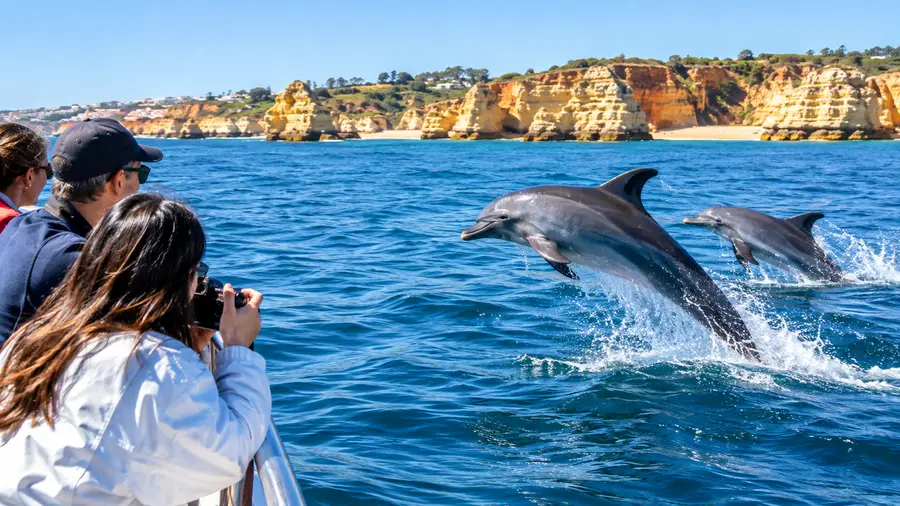
- Camera wrist strap: If the boat hits an unexpected wave while you are framing a shot, a loose phone or camera will go straight to the seafloor.
Pack everything inside a waterproof dry bag if you have one. Small RIBs do not have dry cabin space. Bags sit on the floor of the boat where stray seawater washes along the deck scuppers. Keep your passport and dry clothes wrapped in a plastic zip bag inside your backpack just to be safe.
Frequently Asked Questions about whale watching algarve
Can you see blue whales in the Algarve?
Blue whales migrate through offshore Portuguese waters in spring, but sightings are rare. They usually travel far out in deep oceanic trenches beyond the fuel range of commercial tour boats.
How much do whale watching tours cost in Portugal?
Standard two-hour to three-hour wildlife tours in the Algarve cost between €40 and €65 per adult, depending on the boat size, departure harbor, and whether a marine biologist leads the trip.
What happens if we do not see any whales?
Whales are wild animals traveling across thousands of square miles of ocean, so sightings are never guaranteed. Most companies spot dolphins on roughly 90% of their trips, but dedicated whale sightings hover closer to 15% to 30% depending on the month. Some operators offer a voucher for a second trip if no cetaceans are found.
Are orcas dangerous to tour boats in the Algarve?
While Iberian orcas have bumped and damaged the rudders of private sailing yachts in recent years, commercial RIBs and fast motorized boats have operated without incident. Skippers give orcas plenty of space and disengage propellers if they approach.
Quick Reference
- Best departure hub: Sagres (Porto da Baleeira)
- Peak migration window: April-May and September-October
- Most common species: Fin whale, minke whale, common dolphin
- Standard ticket cost: €40 to €60 per adult
- Recommended vessel: Rigid Inflatable Boat (RIB)
Book your dolphin watching algarve experience:
The Reality Check: Is It Worth It?
If you book an offshore trip expecting a guaranteed, close-up whale encounter like you might get in Hermanus or Monterey Bay, you might end up disappointed. The Algarve is primarily a migration corridor, not a semi-enclosed feeding bay. Some days you spend two and a half hours bouncing across relentless grey swell, staring at empty horizon lines, seeing nothing more than a couple of flying fish and a lonely storm petrel. That is the raw nature of wild ocean expeditions.
When the conditions line up and the skipper spots that tall column of vapor against the horizon, every euro spent feels completely justified. Watching an eighty-ton fin whale cruise effortlessly through turquoise water off the rocky cliffs of Sagres is an experience that stays with you long after the sun tan fades. Book for the morning, dress warm, swallow the seasickness pill early, and treat any whale sighting as a rare Atlantic gift rather than a tourist guarantee.
Read more about dolphin watching algarve.