Dolphin Watching in Sagres, Faro and Portimão
The wind off Cape St. Vincent has a bite to it, even in mid-July. If you stand by the harbor in Baleeira early in the morning, the smell of diesel and salted kelp hits you straight away. Most people heading down to the Algarve stay around the central hotel strips, but booking dolphin watching sagres puts you out at the edge of continental Europe where the Atlantic Ocean drops off into deep underwater canyons. The water is colder out here. The swells are bigger, and the encounters feel far more wild than commercial.
Over the past few years, I have taken boats out of three completely different departure hubs across southern Portugal: Sagres in the rugged west, Portimão along the Arade estuary, and Faro down in the salt marsh lagoons. Each port gives you a radically different day on the water. You get different boat setups, varied sea states, and unique marine environments. Sagres offers open ocean pelagics, Portimão lets you combine pods with rock formations, and Faro takes you winding through coastal sandbars into the Gulf of Cádiz.
Book your dolphin watching algarve experience:
The Raw Atlantic: Why Dolphin Watching Sagres Is Built Different
Sagres is not for anyone looking for a calm cocktail cruise. Boats here leave from Porto da Baleeira, tucked into the lee of the headland, but within seven minutes you clear the point and hit open water. The continental shelf drops off rapidly south of here. Deep-water upwellings push nutrients to the surface, creating massive feeding grounds for pelagic sea life. That is why marine life gathers here in densities you simply do not see along the shallow beaches further east.
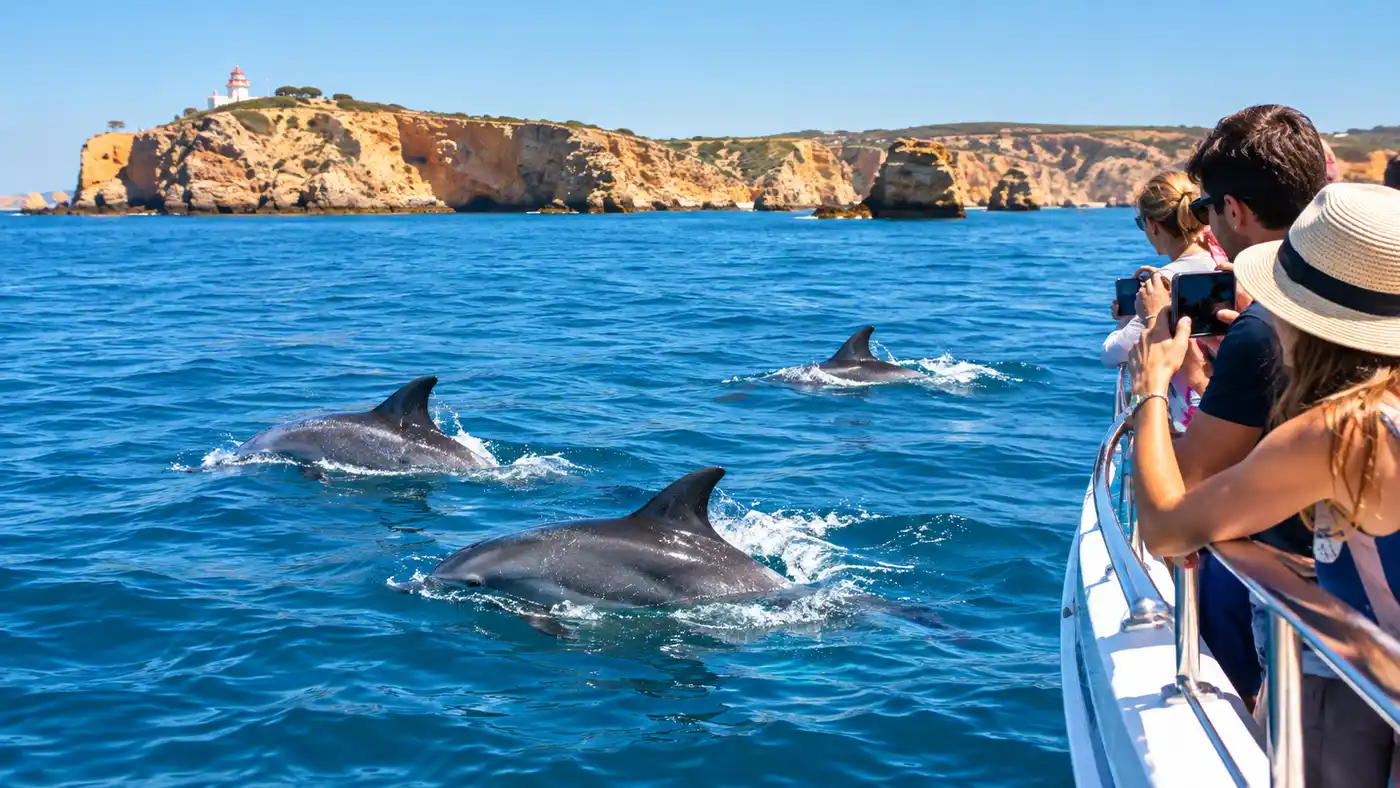
On my last trip out of Baleeira, we boarded an 11-meter rigid inflatable boat (RIB) fitted with twin 250-horsepower outboards. You sit straddling padded jockey seats, holding tight to metal grab rails while the hull slaps across choppy swells. About 5 miles offshore, our skipper throttled down. At first, there was only the sound of water lapping fiberglass. Then came the exhale. A soft, explosive hiss off the port side. A pod of around 35 short-beaked common dolphins appeared, with mothers flanking tiny calves no longer than an arm. They stayed with our wake for nearly 20 minutes, surfing the hull pressure wave before peeling off to chase a school of mackerel.
Pro tip: Sit near the rear third of the boat if your lower back gets sore easily. The bow catches air and slams down hard over the Sagres Atlantic chop, while the stern stays relatively planted.
Because the water drops to immense depths quickly around the cape, your odds of seeing larger marine visitors jump significantly. You are far more likely to cross paths with minke whales, harbor porpoises, or even migratory orcas here than anywhere else in Portugal. If you are drawn to the bigger species, check out our guide to whale watching in the Algarve for seasonal patterns and migration tracks.
The wind can be brutal. Even on days when the town feels warm, out on the water you will feel the cold Atlantic air biting through a light shirt. A windproof shell is mandatory out here.
Portimão: Blending Open Water with the Portimao Caves
Portimão offers a very different rhythm. You start at the marina or along the concrete river docks of the Rio Arade, drifting past old sardine canneries and the stone ramparts of the Ferragudo fort. The transition from smooth river water to ocean swell is gradual. Skippers leaving Portimão face a logistical choice: push south into deep shipping lanes to search for dolphins, or cruise east along the cliffs to explore the limestone sea grottos and the famous portimao caves around Benagil.
Most commercial operators here offer combination tours. You spend the first 75 minutes hunting for common or bottlenose pods offshore, then spend the remaining hour hugging the coastline to inspect collapsed sea caves and hidden beaches. It works well if your group cannot agree on whether they want marine biology or scenic coastal photography. The downside is simple: splitting your trip means less time searching for pods if the animals are scattered far offshore.
Sea conditions out of Portimão are generally calmer than Sagres. The western headland shields the bay from the worst northwesterlies. You will find larger catamarans running these routes alongside the usual fast RIBs. Catamarans give you toilets, shaded benches, and stable walking decks, though they cannot change direction quickly when a pod surfaces 300 meters away.
- Morning departures: The local coastal wind, the nortada, usually gathers strength around 1:30 PM, making afternoon trips bumpier and wetter.
- Tour focus: Dedicated wildlife runs venture up to 12 miles out, while combo tours spend half their fuel budget near the cliffs.
- Estuary sights: Look toward the muddy banks of the Arade as you leave the harbor, where spoonbills and gray herons hunt during low tide.
Faro and the Ria Formosa: Dolphin Watching Faro Portugal Style
Taking a boat tour faro operators organize feels like two outings stitched together. You begin inside the calm, shallow channels of the Ria Formosa natural park. You motor past oyster beds, mudflats, and low barrier islands at five knots, watching storks and flamingos sift through the silt. It takes about 35 minutes just to navigate the sandy channels out toward the Barra de Faro or Culatra Island before you meet the open sea.
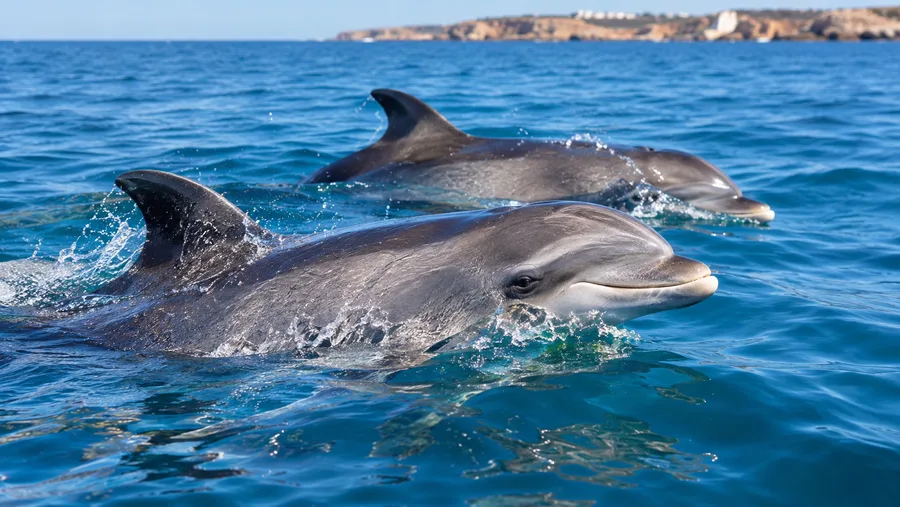
Once you break through the sand spits into the open Atlantic, the coast flattens out entirely. You will not see dramatic orange cliffs or jagged headlands here. Instead, you get an uninterrupted horizon over the Gulf of Cádiz. Setting out for dolphin watching faro portugal often brings you into contact with large resident pods of bottlenose dolphins. These animals love to work the perimeter of commercial fishing boats that pull their nets outside the barrier islands.
Note: Fog can roll in fast across the Ria Formosa during quiet summer mornings. It usually burns off by 10:30 AM, but early departures might spend the first 20 minutes navigating entirely by GPS instruments.
Boats based in Faro are often slightly smaller shallow-draft vessels designed to navigate lagoon channels without running aground at low tide. When the tide drops, the route becomes a maze of sandbars. I love the slow crawl through the wetlands. It gives you time to adjust your gear, settle in, and watch shorebirds before the captain pins the throttle in open water.
Book your dolphin watching algarve experience:
Comparing the Hubs: Costs, Boats, and Sea Conditions
Deciding where to base yourself depends on where you stay, how your stomach handles swell, and what you want to see. Sagres offers untouched Atlantic nature. Portimão gives you scenic variety. Faro mixes wetland birding with open-sea tracking. If you are trying to figure out when to visit, read our seasonal overview on the best time for dolphin watching in the Algarve.
Here is how the standard 2- to 2.5-hour tour compares across all three ports based on adult bookings and typical vessel types:
| Departure Hub | Typical Price | Standard Boat | Sea State | Trip Focus |
|---|---|---|---|---|
| Sagres | €40 - €50 | Rigid Inflatable (RIB) | Moderate to rough swell | Pelagic marine life, whales, wild ocean |
| Portimão | €35 - €45 | RIB or Catamaran | Gentle to moderate chop | Dolphins plus coastal caves and cliffs |
| Faro | €38 - €48 | Shallow-draft RIB | Calm lagoon, open sea swells | Wetland birds, barrier islands, bottlenose pods |
Whichever dock you choose, being prepared makes the difference between an incredible morning and two hours of misery. The ocean does not care about your holiday itinerary.
- Footwear: Put on non-marking rubber-soled shoes; flip-flops get dangerously slick on wet deck fiberglass.
- Layers: Wind chill at 25 knots will chill your bones even when town temperatures reach 30°C.
- Hydration: Bring a sturdy metal water bottle; lightweight plastic bottles blow overboard the second you let go.
- Nausea medication: Take motion sickness pills at least 45 minutes before stepping onto the boat, because swallowing them while rolling in heavy swell does nothing.
What It Really Takes to Spot Cetaceans in the Wild
Locating wild dolphins is hunting without weapons. Skippers do not use fish finders to pinpoint them. Commercial sonar pulses interfere with cetacean echolocation, so responsible crews rely completely on sharp eyes. They scan the water for slight surface breaks: a quick flash of white spray against a dark swell, an oily sheen on the surface, or a group of Cory's shearwaters circling low over an area.
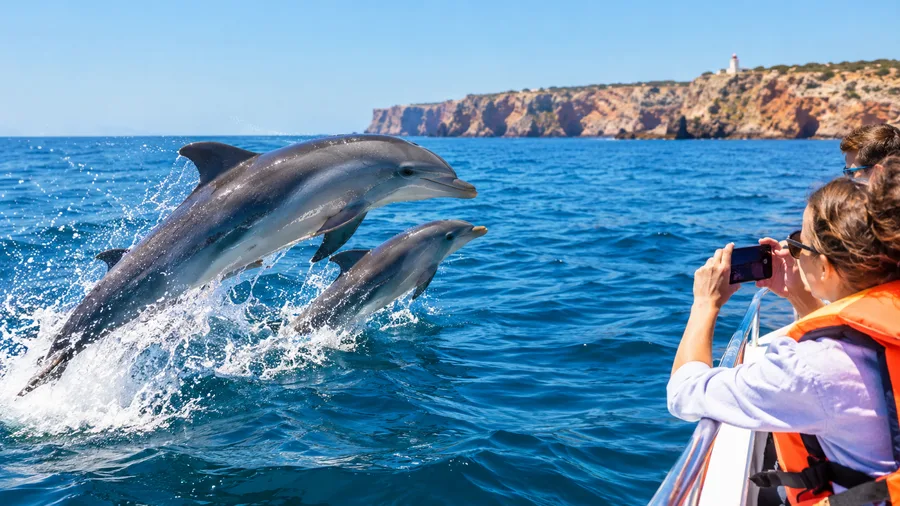
Some days the ocean looks like an empty desert. You bump over gray waves for an hour with eyes stinging from salt spray, spotting nothing but drifting kelp and the occasional floating crate. Then someone spots a fin. When you get closer, the sea comes alive. Common dolphins love to travel in fast, acrobatic pods that breach clear of the water in sync. Bottlenose dolphins tend to be heavier, surfacing with slow, powerful rolls.
Ethical skippers never steer straight through a pod. They match speed and stay parallel around 60 meters away, letting the dolphins decide if they want to interact. Most of the time, the animals come right to you. Juveniles often dart under the hull, rolling onto their sides to eyeball the humans leaning over the side. That brief look through the clear green water stays with you for a long time.
Sightings are never 100% guaranteed. Wild animals move where the food goes. Most quality operators boast success rates around 90 to 95 percent from May through October, but zero-sighting runs happen to everyone eventually. Good companies usually offer a free return voucher if you strike out.
Frequently Asked Questions about dolphin watching sagres
What are the odds of seeing dolphins in Sagres?
Sightings sit around 90% between May and October. Deep water upwellings near the cape attract massive schools of baitfish, which keep common and bottlenose dolphins feeding in the area consistently.
Is the boat ride out of Sagres suitable for young children?
Most operators enforce a minimum age limit of 4 or 5 years old. The boats are fast RIBs and the Atlantic swell off Cape St. Vincent can be rough, so kids need enough grip strength to hold their seat rails safely.
How does dolphin watching in Sagres differ from Portimão and Faro?
Sagres is raw ocean wilderness with deep drop-offs and a higher chance of spotting pelagic species like whales. Portimão blends wildlife runs with limestone cliff caves, while Faro navigates through the flat sandbars of the Ria Formosa before hitting the ocean.
Quick Reference
- Sagres offers the best odds for rare pelagic species and whales
- Portimão allows you to combine dolphin searches with coastal sea caves
- Faro tours start with a scenic crawl through Ria Formosa bird reserves
- Mornings always have calmer seas than afternoons across all three ports
Book your dolphin watching algarve experience:
The Bottom Line
If you want sheer wildness and deep ocean water, go to Sagres. It feels like real exploration, out past the lighthouse where the land just ends. If you want a comfortable, varied day out with cave photos and easier seas, book out of Portimão. And if you love birding or are based near the airport, Faro gives you a great mix of marshland nature and open sea. Pick your port, dress warmer than you think you need to, and book the earliest morning departure on the board.
Read more about dolphin watching algarve.